Showing posts with label historical fiction. Show all posts

Monday, March 4, 2013

{review} lazarus is dead

Richard Beard Lazarus is Dead (2011)
Mary and Mary, the mother of Jesus and the sister of Lazarus. The number of Marys in the bible can seem clumsy, and a fiction writer would have edited out the confusion – the mother of Jesus and the sister of Lazarus (and also Mary Magdalene) should have different names so that readers can tell them apart. In fact there are two Marys for a simple reason: the sister of Lazarus is named after the mother of Jesus, and as a clue to her character the Mary connection is useful – the Lazarus Mary is a younger version of the Virgin Mary, and equally devoted to Jesus. Before too long, she will be washing his feet with her hair.

I'm very late to the party with this book. I LOVED IT. I really wish I'd written it. Not about Lazarus, but – precisely because Beard's format so well suits any semi-archetypal, quasi-historical figure – about Aesop. I'll say more about that. 

This is a deliberately 'clever' book, and I liked it for how blatantly it advertised that fact. Literary allusion, lit. crit., biblical history, art history, basic epidemiology, and fictions of academic rigour are interwoven through the narrative. It is a startling book, with its metafictional perspective on its own dubious factuality.
With Lazarus, but also in many other fields, innovative discoveries can be made by trusting the historical human imagination. Admittedly, reconstructions have to be revised as new imaginative records become available, but biographers should stay faithful to the patterns that consistently emerge.
Lazarus is Dead examines the back-story of the death and resurrection of the biblical figure of Lazarus, stripping and embellishing, renovating and restructuring the slight gospel references into a fictional biography that simultaneously explores the place of the Lazarus miracle in the 'historical' Jesus narrative. I am by no means a New Testament scholar, and have no idea whether the fictional narrative's conclusion - that Lazarus is part of Jesus' 'practice' of the miraculous that leads to the final miracle of Jesus' own resurrection – has been offered up (albeit not in such a playful manner) in serious biblical exegesis. It may be a little on the blasphemous side for some readers.

Lack of firm knowledge about Lazarus is a tremendous boon to Beard's fictional reconstruction. As he writes, "We… have no direct access to Lazarus's version of the story". We know little apart from the gospel reference, and one thing that made me smile about this book was how Beard does a pretend academic work-over of the material at his disposal. So, no ancient evidence?
These are the sources other than the bible that can enlighten the biography of Lazarus.
...
The question about when Lazarus befriended Jesus is partially answered in a book by the Portuguese novelist and Nobel prize-winner José Saramago. In The Gospel According to Jesus Christ (1991), Saramago identifies a moral flaw in the popular story of the nativity...
This "evidence… extrapolated from salvaged memories and insights" is so playfully, easily, reflexively postmodern - it almost gives one a pain.
Thomas Hardy rhymes Lazarus with cadaverous, and the Swedish Nobel prize-winner Pär Lagerkvist, in Barabbas (1950), conveys an accurate impression of how Lazarus must have appeared to contemporary observers.
Or:
I can therefore say with confidence that today, on the morning after the first miracle performed by Jesus at the wedding in Cana, as Lazarus sets out for Jerusalem with Absalom and a couple of selected lambs, he is probably clean-shaven. In any biography, which is an attempt to bring someone back to life, the facts will generate patterns of evidence. There is a coherence to the visual memory of Lazarus: in the portrayals that survive, mostly paintings made between 1300 and the end of the eighteenth century, Lazarus is consistently free of facial hair.
The other neat trick played by the narrative involves bringing Lazarus back into the Jesus story. He is minimalized in the New Testament, but his foregrounding in the fictional recreation - particularly through an childhood bond with Jesus - brings out how much of a shadow-Jesus role he can play as the one who goes first, the test-case as it were: so, Beard's Jesus is "learning his lesson from Lazarus, dying in the open in front of witnesses, a verifiable public death."
Christians usually interpret Lazarus as a prefiguring of Jesus, who is Christ. This is the purpose of Lazarus's life, for those who believe in his literal existence, and his narrative function in the bible for those who don't.
Lazarus in a 6th century AD mosaic from Sant'Apollinare Nuovo, Ravenna. Source.

Lazarus-the-man is not terribly appealing. He smells dreadful, and "[h]is life is ordered, successful, unusual; he has no need of enlightenment". But he is terribly human and fallible, and it is his humanity that is so central to the book, and brought out as an effective foil to an inhuman (in a number of senses) Jesus.
Perhaps he'll thank Jesus warmly for all he's done. But, now he thinks about it, he might also suggest that Jesus could have come earlier, or stopped him from falling sick in the first place. It seems churlish to complain, but every first word he imagines saying is 'but'.
Apart from Lazarus, a number of other characters stand out. I would single out Cassius, the Roman sent to sort out what sort of danger is posed by Jesus' miracles. Cassius is not a believer in miracles; he thinks in terms of utility - and about how "compellingly staged" are the miracles: "He decides what Rome needs and then makes it happen." The Romans appreciate good stage-management. What use can he make of Lazarus? Will Lazarus survive death only to lose his life in a Roman prison? Or will Lazarus be the Jesus the Romans need?
'If we do kill you we'll do it properly,' Cassius adds, sensing that at last his words are having an effect. He pushes on. 'Death the Roman way means crucifixion, and no one comes back from that.'
'Please. I haven't broken any laws. Not that I know of.'
'I was there at the tomb. I saw what happened.'
'So what did you see? Did I come back from the dead?'
'In some ways, for your sake, I hope so. If you're lying then the penalty for false witness is death.'
'The penalty for everything is death.'
'That's justice for you...'
I loved this book. It will definitely be on my list of best reads of the year. It is so rich and imaginative and funny and playful (and brutal, stomach-turning and occasionally utterly horrifying). It is a remarkable fictional commentary on historical interpretation.
At some stage, and this is equally true for the historical Jesus, we must avoid a preoccupation with attempts to establish factual propositions. The evidence about Lazarus is fragmentary, and may have been misinterpreted in the two thousand years between then and now.
*  *  *
(And, my reference to Aesop? I haven't felt so stimulated by a book about the gospels since I read Frank Kermode's The Genesis of Secrecy: On the Interpretation of Narrative. I read this as a PhD student trying to unravel the multiple narratives surrounding Aesop, the fable-writer, who can be regarded as another more or less mythical figure (like Beard's hero), and who was also the topic of fictional biographies, the motivations for and sources of which are far from transparent.)

Monday, January 14, 2013

{by no means a review} china, heyerisms, 2013

2013 is already getting away from me. But I have no reading plans, which is lucky, since I've read almost nothing except Georgette Heyer books since the end of November. They're comfort reads, end-of-year-can't-face-anything-new reads, travel reads... Travel. That's what else I've been doing - 10 days in China and Hong Kong over Christmas.

Terracotta Warriors, Xi'an.

Amazing, aren't they? (And in the news again.) China was BRILLIANT. I know pretty much zero about her history and culture, and it was actually quite refreshing to be in that position where one is forced to be open to everything. Of course, as my sister has lived in Beijing for a dozen years or so, we were very well looked after and not overly exposed to any of the things that I'm not so keen on (squat toilets, for instance!). It also snowed a little, which was a Christmas treat. (We then returned to Adelaide where it was a 45 degree inferno. Bah.)

Ginger cats at the Great Wall, Mutianyu

I have added Marina Warner's The Dragon Empress (Life and Times of Tz'u-hsi, 1835-1908, Empress Dowager of China) to my TBR.


Empress Cixi was quite a piece of work - I think my favourite story is how she blew the naval budget on a massive (and immovable) stone barge for the Summer Palace.

Cixi's 'clear and peaceful boat, Summer Palace. Beijing

But, as I say, almost nothing else has been read until recently except Georgette Heyer. Her books are witty, charming and full of lovely little historical tidbits. If I have any aims in 2013, let this be the one: no more contemporary insults for me! It's going to be Heyer-isms all the way. I've made myself a little list...

  • bear-garden jaw 
  • behaved like a smidge 
  • bird-witted 
  • bleater 
  • bracket-faced 
  • brandy-faced, cork-brained 
  • buffleheaded 
  • bum squabbled 
  • caper-witted creature 
  • cawker 
  • chicken-nabob 
  • chuckfarthing fellow 
  • confirmed sapskull 
  • counter-coxcomb 
  • cribbage-faced tooth-drawer 
  • damned mincing puppy-dog 
  • damned scattergood 
  • dashed shabrag
  • elbow-crooker… reeks of spirits 
  • flat-sided screw 
  • forty-jawed 
  • Friday-faced creature 
  • gigantic hobbledehoy
  • giglet 
  • gin-swilling, cross-eyed numskull 
  • lily-livered… miserable man-milliner 
  • mackerel-backed 
  • man-milliner 
  • old muckworm 
  • old shagbag 
  • pudding-heart
  • pure popinjay 
  • regular gabble-grinder 
  • regular slow-top 
  • sadly shatterbrained 
  • shagbag 
  • simpering, inching macaroni merchant 
  • skitterbrain 
  • skitterwitted 
  • slibberslabber here-and-thereian 
  • Stubble it, you old rumstick! 
  • such a shuttlehead 
  • tongue-valiant 
  • trifle cucumberish 
  • vile and an abominable young thatchgallows 
  • whopstraw 
  • windy-wallets 
  • young sauce-box

Enjoy 2013!

Monday, October 29, 2012

{review} the rowland sinclair series

Sulari Gentill A Decline in Prophets (2011) 
Sulari Gentill Miles Off Course (2012) 
Sulari Gentill Paving the New Road (2012)


Rowland Sinclair, Milton Isaacs and Clyde Watson Jones lined up at the foot of her bed, all leaning against the rail as they asked about her health. Annie Besant regarded them warmly. It was a particularly Australian habit, she observed - to lean. Australian men seem to lean whenever possible - against walls, posts, chairs… Australians had the ability to relax in any company or circumstance - they would face Armageddon itself leaning casually on a fence.
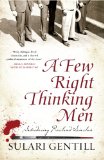
Sulari Gentill's 'Rowland Sinclair' series goes from strength to strength. She is such a refreshing new voice in Australian crime writing: no brutalized female corpses; barely a hint of sex; lots of solid historical background (and some wonderful bits from old newspapers), memorable characters, classic locations, and a sprinkling of little historical and literary riddling to tease the reader. I reviewed her first book (A Few Right Thinking Men) here, and have recently devoured the next three in the series. 


The second in the series is A Decline in Prophets. I was wondering how Gentill would manage her large cast of regular characters, and a highlight of this book was how she took her time to flesh out the groups' dynamics. Their witty badinage is a delight. We discover our hero Rowly - semi-voluntarily exiled from Australia after his disastrous run-in with the New Guard - travelling in style on RMS Aquitania, along with a group of Theosophists (including Annie Besant), a hot-headed Catholic Bishop, various eligible young ladies, and - of course - his faithful coterie of Clyde the artist, Milt the Red poet, and Edna, sculptress and unattainable love of Rowly's life. The action shifts - with murders aplenty - from the luxuries of life onboard to New York (where Edna makes a hit with one Archie Leach) then back to Sydney. Mysterious pregnancies, mad prophets, ambiguous suicides, Masons, mortuary chapels, dodgy poetry, and lots of fun and games. Can the gang make it safely back to lovely Woollahra with a murderer hot in pursuit? And has Rowly pushed his conservative elder brother's tolerance of his Bohemian lifestyle too far this time? A Decline in Prophets won the 2012 Davitt Award for Best Adult Crime Novel by an Australian woman.


The third in the series, Miles Off Course, is, I think (and at the moment!), my favourite. It has such a wonderful Australian setting, moving from the sophisticated high life of the rich in the Blue Mountains to the harsh life of the stockmen who graze their animals in the 'High Country' of the Snowy Mountains. Rowly is sent by his brother Wilfred (a 'Mycroft', and one of my favourite characters - perhaps I relate to being the oldest sibling?) to track down a missing stockman. Harry Simpson is no ordinary stockman - an Aboriginal hand who grew up with the Sinclairs, he is far more than an employee to the Sinclair men. Rowly's stint roughing it in the High Country is more than welcome to him for other reasons: someone is gunning for him - could he be the next high-rolling victim of a spate of abductions? If the travelling snake circus doesn't get him first… This book also has the single best opening line I have read in the last decade. 


No 4., Paving the New Road, offers a change of scene for Rowly and his mates; it is also rather more brutal than its predecessors. It is quite an achievement on Gentill's part to create a veristic 'What If?' as she transports her gang of Bohemian Australian artists to Munich, 1933: "it was decided that they would pose as art dealers. Art was a language they could all speak." Rowly agrees to go to Germany to sabotage the plans of his old enemy Eric Campbell, the New Guard politician who would bring Fascism to Australia. Campbell is touring with members of the British Union of Fascists, whose members include the repellent Unity Mitford (with whom Rowly makes rather a hit). Along the way, Rowly also makes the acquaintance of a young blonde lady called Eva who works for a photographer and has a very secret boyfriend… Gentill does a lovely job manipulating people, events (and dates) to place her hero at the centre of an Australian-led fight against Fascism. There's a lot of humour in this book, despite the grim subject-matter and the knowledge of what is to come for the world. Where will Rowly and co. be in 1939? At the rate Gentill is producing these books, that won't be long! (Two incidental points: does "taught-haired" = tow-haired? And how freaky is it to discover someone you know has given his name to a character. My equilibrium is still awry.) 

If you liked this... for crime-loving history-nerds? It is hard to avoid comparison with Kerry Greenwood's 1920s' heroine Phryne Fisher, who is rich, strong-minded, and (er... unlike Rowly) not always a lady.


Monday, September 3, 2012

{review} soulless

Gail Carriger Soulless [The Parasol Protectorate, Book 1] (2009)
He kissed as though he needed her to subsist. It was unbearably intimate. Worse than allowing one’s ankles to be seen.

This was fun. I read it on the plane to Europe, and it is perfect for that sort of ordeal - light and funny and rather silly. But! - if you don't like vampires, werewolves and anachronistic Victoriana, turn away now...
Miss Alexia Tarabotti was not enjoying her evening. Private balls were never more than middling amusements for spinsters, and Miss Tarabotti was not the kind of spinster who could garner even that much pleasure from the event. To put the pudding in the puff: she had retreated to the library, her favorite sanctuary in any house, only to happen upon an unexpected vampire.
Alexia Tarabotti is a preternatural - she has no soul. This is a little tricky for her, although it is not causing her as much social difficulty as reaching a dangerously unmarriageable age for a young lady. Being soulless affords good protection against the vampires and werewolves who openly roam this alternate England where the supernatural mingle openly with the human population. Being a spinster is making her home life hellish. And then she discovers that someone is intent on destroying the fragile peace between the supernatural and human worlds...
She was quite uncomfortable, for corsets, bustles, and all other accoutrements of a lady’s appropriate dress were not conducive to lying, bound, on a hard floor. She shifted, sighed, and stared up at the ceiling, trying to think about anything but Lord Maccon, her current predicament, or Lord Akeldama’s safety. Which meant she could do nothing but reflect on the complex plight of her mama’s most recent embroidery project. This, in itself, was a worse torture than any her captors could devise.
This really is over-the-top silly; but an enjoyable read. The heroine is strong and independent of mind (and wields a mean parasol "with purple satin pansies... and buckshot in its silver tip"), and not averse to getting to (all sorts of) grips with the handsome Lord Maccon, sent by the supernatural side of the civil service to sort things out.
She could not restrain herself; she did so like it when the earl’s Highland lilt came out. It was currently her second favorite thing he did with his tongue.
If you liked this... it was like India Black {REVIEW and REVIEW} meets vampires. 
And (bonus!)... if you like retro things, Gail Carriger has a blog on retro fashion.


Friday, June 1, 2012

{misc.}


Dim image of dessert train (taken by over-sugared photographer 
with fear of taking photos of food in public and
accompanied by food photography disapproving friend.)

Well, I'm crazy insane busy in a why-did-I-do-this-when-I-could-be-reading-fun-books?-way. 'This' being a paper I am writing for a conference in early July. In Edinburgh. In Scotland (in case there is another Edinburgh somewhere). I haven't given a serious academic paper for so long. Years. Many, many years. Books for fun have certainly fallen by the wayside while I juggle too many things, including my day job which has nothing to do with my other lives.

And my reading plans? I do hope to read something for Beryl Bainbridge week. And I do hope that I will be able to wallow in frivolous reading during the horrific number of hours/days it will take me to get from Australia to Scotland (via - my reward! - Paris).

Anyway, I had a lovely bookish encounter the week before last when, on a quick jaunt from Adelaide to Sydney (primarily to use the university library, though I confess I also used a dessert train to sustain my endeavours), I was taken by a friend to hear Sulari Gentill speak at Sydney Writers' Festival. I had loved her debut historical crime novel, A Few Right Thinking Men {REVIEW}, and was pleased to find the author as quirky and amusing as her book. She was an excellent speaker 'in conversation' about how - and what - she writes. She also grows black truffles and studied both astrophysics and law at university. Afterwards I got to speak with her, while getting the next two books in the Rowland Sinclair series signed (always a thrill to have a signed copy, I think), and she was such a delight.

It is nice when a writer one admires turns out to be a lovely person as well. Incidentally, there was quite a bit of celebrity-spotting available at the festival. At the next signing booth was Dame Stella Rimington. The thrill! And, according to a passerby, Roddy Doyle was sitting next to us at lunch.

The Sulari Gentill books I bought (breaking the book-buying ban that has been in force to fund my 'holiday') were A Decline in Prophets and Miles Off Course (more info via the publisher). If only I had the time to read them...


Monday, April 16, 2012

{review} the song of achilles

Madeline Miller The Song of Achilles (2011) 

 
I turned. Thetis stood at the edge of the clearing, her bone-white skin and black hair bright as slashes of lightning. The dress she wore clung close to her body and shimmered like fish-scale. My breath died in my throat. ‘You were not to be here,’ she said. The scrape of jagged rocks against a ship’s hull. She stepped forward, and the grass seemed to wilt beneath her feet. She was a sea-nymph, and the things of earth did not love her.
Madeline Miller has produced a remarkable redaction of the story of the Greek hero Achilles - the 'best of the Achaians' [Greeks] of the Trojan War. Miller has a real feel for the stories behind the Trojan War saga, not least The Iliad. The result is a very much humanized presentation of the great hero, told from the perspective of his lover Patroclus.  

The Iliad is a hard read. It helps to like men and battles. It is a wonderful poem if you can stay the distance. Miller's great achievement is to take this material and rework it into something that makes one want to return to the original - she reminds the reader of how extraordinary are these stories.

The plot: Miller's narrator Patroclus (yes, it's first person) tells the story of how he met Achilles, their boyhood, adolescence, increasing sexual attraction, and their attempts to avoid Achilles' known fate: 
My hand closed over his. ‘You must not kill Hector,’ I said. He looked up, his beautiful face framed by the gold of his hair. ‘My mother told you the rest of the prophecy.’ ‘She did.’ ‘And you think that no one but me can kill Hector.’ ‘Yes,’ I said. ‘And you think to steal time from the Fates?’ ‘Yes.’ ‘Ah.’ A sly smile spread across his face; he had always loved defiance. ‘Well, why should I kill him? He’s done nothing to me.’ For the first time then, I felt a kind of hope.
Some characters really shone for me: Miller's Odysseus is wonderfully tricky - as he should be. Miller's presentation of Achilles' mother, the goddess Thetis, manages to surmount the problems of realistically presenting gods in a human world.

 Some things didn't work so well for me: I thought Miller had some problems with time: after all, there is a lot of time to get through during the Trojan War when nothing much is happening except battle, battle, battle. The segues from stasis to action seemed sometimes forced. I also found the love scenes a bit coyly soft focus; indeed, on one level, the whole book sometimes threatens to veer into 'romance' territory.
I handed him the last piece, his helmet, bristling with horsehair, and watched as he fitted it over his ears, leaving only a thin strip of his face open. He leaned towards me, framed by bronze, smelling of sweat and leather and metal. I closed my eyes, felt his lips on mine, the only part of him still soft. Then he was gone.
But, you know, I really enjoyed The Song of Achilles. I enjoyed Miller's take on the Patroclus-Achilles relationship (were they? weren't they? was always an issue in studying The Iliad and works of the epic cycle). I think it is fantastic that a book that is in its own way a love song to a far more ancient book is a contender for the Orange Prize and I think that Miller has done classical studies the sort of huge popularizing favour that ordinarily only comes about nowadays via the cinema - Gladiator et al.
‘Is it right that my father’s fame should be diminished? Tainted by a commoner?’
‘Patroclus was no commoner. He was born a prince, and exiled. He served bravely in our army, and many men admired him. He killed Sarpedon, second only to Hector.’
‘In my father’s armour. With my father’s fame. He has none of his own.’
Odysseus inclines his head. ‘True. But fame is a strange thing. Some men gain glory after they die, while others fade. What is admired in one generation is abhorred in another.’ He spread his broad hands. ‘We cannot say who will survive the holocaust of memory. Who knows?’ He smiles. ‘Perhaps one day even I will be famous. Perhaps more famous than you.’
‘I doubt it.’
Rating: 8/10.

If you liked these: go on, read the original.

Thursday, April 5, 2012

{review} maids of misfortune

M. Louisa Locke Maids of Misfortune: A Victorian San Francisco Mystery (2009)
M. Louisa Locke Uneasy Spirits: A Victorian San Francisco Mystery (2011)

 
Annie shuddered. Every time Nate said those words, she felt a blow to the framework of her existence. How do you become a person whom someone wants to kill? How do you go about your day, knowing some unknown person is out there plotting your death?
I'm a bit mixed up about things which are 'free'. Why would someone sell their book for free? Books are hard work. Books in Australia are also heinously expensive which I think adds to my uneasy feelings: are free books rubbish books? 

The Amazon 'Top Free' list comes through my feed reader every day (RSS link), but generally the content doesn't hold much interest for me. Occasionally there's a familiar name, but generally there is a lot of bodice-ripping and cooking recipes to wade through (maybe if the genres were combined I might stop a little longer?!). Only very, very occasionally is there something that makes me click onwards. 

The blurb for M. Louisa Locke's first historical detective novel was appealing: in late 1870s' San Francisco an independent woman, a young widow, who runs a boarding house and has a financially successful sideline pretending to be a fortune-teller, is drawn into the suspicious death of a client. The author was a professor of history before retiring to write fiction. This pushed some buttons for me.

And I was very, very pleasantly surprised: Maids of Misfortune was a very enjoyable read - plenty of nice historical detail, a really likeable heroine, a typically gorgeous male helper figure to add some will-she?-won't-she? to the action. 

I would recommend this if you like a light historical read with a dash of romance and a nice puzzle to get the grey cells going. I would have bought the second in the series (Uneasy Spirits) but the next day it too popped up in the free list.
Mrs. Henderson was a widow, here to communicate with her departed husband, a pharmacist. Miss Reynolds was her sister. She had evidently developed a lovely relationship with a minor Greek philosopher who spoke to her through Arabella.
In this second book I thought the puzzle was a good one (about dodgy séances) though the dialogue sometimes seemed to flow less easily than the first book. I thought there were moments of cliché in both books (the hero's warm skin and beating heart through his fine linen; the heroine smelling of sunshine; some 'delicate' nose-blowing), but, hey, it's a clichéd genre and that's probably what I felt like when I devoured these two neat bits of historical crime fiction. There's a third on the way too. 

Oh, and my 'thing' about free stuff? The author has an interesting piece on her blog about why she added the books to the 'free' program and what a success if has been. And, yes, this has made me have a good think about my snobby perspective on the value of free stuff.

Rating: 3/5 for both.

If you liked this: it's Julia Grey territory.

{READ IN 2018}

  • FEBRUARY
  • 30.
  • 29.
  • 28.
  • 27.
  • 26. The Grave's a Fine & Private Place - Alan Bradley
  • 25. This is What Happened - Mick Herron
  • 24. London Rules - Mick Herron
  • 23. The Third Eye - Ethel Lina White
  • 22. Thrice the Brindled Cat Hath Mewed - Alan Bradley
  • 21. As Chimney Sweepers Come to Dust - Alan Bradley
  • 20. The Dead in Their Vaulted Arches - Alan Bradley
  • 19. Speaking from Among the Bones - Alan Bradley
  • JANUARY
  • 18. Eleanor Oliphant is Completely Fine - Gail Honeyman
  • 17. Miss Ranskill Comes Home - Barbara Euphan Todd
  • 16. The Long Arm of the Law - Martin Edwards (ed.)
  • 15. Nobody Walks - Mick Herron
  • 14. The Talented Mr Ripley - Patricia Highsmith
  • 13. Portrait of a Murderer - Anthony Gilbert
  • 12. Murder is a Waiting Game - Anthony Gilbert
  • 11. Tenant for the Tomb - Anthony Gilbert
  • 10. Death Wears a Mask - Anthony Gilbert
  • 9. Night Encounter - Anthony Gilbert
  • 8. The Visitor - Anthony Gilbert
  • 7. The Looking Glass Murder - Anthony Gilbert
  • 6. The Voice - Anthony Gilbert
  • 5. The Fingerprint - Anthony Gilbert
  • 4. Ring for a Noose - Anthony Gilbert
  • 3. No Dust in the Attic - Anthony Gilbert
  • 2. Uncertain Death - Anthony Gilbert
  • 1. She Shall Died - Anthony Gilbert

{READ IN 2017}

  • DECEMBER
  • 134. Third Crime Lucky - Anthony Gilbert
  • 133. Death Takes a Wife - Anthony Gilbert
  • 132. Death Against the Clock - Anthony Gilbert
  • 131. Give Death a Name - Anthony Gilbert
  • 130. Riddle of a Lady - Anthony Gilbert
  • 129. And Death Came Too - Anthony Gilbert
  • 128. Snake in the Grass - Anthony Gilbert
  • 127. Footsteps Behind Me - Anthony Gilbert
  • 126. Miss Pinnegar Disappears - Anthony Gilbert
  • 125. Lady-Killer - Anthony Gilbert
  • 124. A Nice Cup of Tea - Anthony Gilbert
  • 123. Die in the Dark - Anthony Gilbert
  • 122. Death in the Wrong Room - Anthony Gilbert
  • 121. The Spinster's Secret - Anthony Gilbert
  • 120. Lift up the Lid - Anthony Gilbert
  • 119. Don't Open the Door - Anthony Gilbert
  • 118. The Black Stage - Anthony Gilbert
  • 117. A Spy for Mr Crook - Anthony Gilbert
  • 116. The Scarlet Button - Anthony Gilbert
  • 115. He Came by Night - Anthony Gilbert
  • 114. Something Nasty in the Woodshed - Anthony Gilbert
  • NOVEMBER
  • 113. Death in the Blackout - Anthony Gilbert
  • 112. The Woman in Red - Anthony Gilbert
  • 111. The Vanishing Corpse - Anthony Gilbert
  • 110. London Crimes - Martin Edwards (ed.)
  • 109. The Midnight Line - Anthony Gilbert
  • 108. The Clock in the Hatbox - Anthony Gilbert
  • 107. Dear Dead Woman - Anthony Gilbert
  • 106. The Bell of Death - Anthony Gilbert
  • 105. Treason in my Breast - Anthony Gilbert
  • 104. Murder has no Tongue - Anthony Gilbert
  • 103. The Man who Wasn't There - Anthony Gilbert
  • OCTOBER
  • 102. Murder by Experts - Anthony Gilbert
  • 101. The Perfect Murder Case - Christopher Bush
  • 100. The Plumley Inheritance - Christopher Bush
  • 99. Spy - Bernard Newman
  • 98. Cargo of Eagles - Margery Allingham & Philip Youngman Carter
  • 97. The Mind Readers - Margery Allingham
  • SEPTEMBER
  • 96. The China Governess - Margery Allingham
  • 95. Hide My Eyes - Margery Allingham
  • 94. The Beckoning Lady - Margery Allingham
  • 93. The Tiger in the Smoke - Margery Allingham
  • 92. More Work for the Undertaker - Margery Allingham
  • 91. Coroner's Pidgin - Margery Allingham
  • 90. Traitor's Purse - Margery Allingham
  • 89. The Fashion in Shrouds - Margery Allingham
  • 88. The Case of the Late Pig - Margery Allingham
  • 87. Dancers in Mourning - Margery Allingham
  • AUGUST
  • 86. Flowers for the Judge - Margery Allingham
  • 85. Death of a Ghost - Margery Allingham
  • 84. Sweet Danger - Margery Allingham
  • 83. Police at the Funeral - Margery Allingham
  • 82. Look to the Lady - Margery Allingham
  • 81. Mystery Mile - Margery Allingham
  • 80. The Crime at Black Dudley - Margery Allingham
  • 79. The White Cottage Mystery - Margery Allingham
  • 78. Murder Underground - Mavis Doriel Hay
  • 77. No Man's Land - David Baldacci
  • 76. The Escape - David Baldacci
  • 75. The Forgotten - David Baldacci
  • 74. Zero Day - David Baldacci
  • JULY
  • 73. Pilgrim's Rest - Patricia Wentworth
  • 72. The Case is Closed - Patricia Wentworth
  • 71. The Watersplash - Patricia Wentworth
  • 70. Lonesome Road - Patricia Wentworth
  • 69. The Listening Eye - Patricia Wentworth
  • 68. Through the Wall - Patricia Wentworth
  • 67. Out of the Past - Patricia Wentworth
  • 66. Mistress - Amanda Quick
  • 65. The Black Widow - Daniel Silva
  • 64. The Narrow - Michael Connelly
  • 63. The Poet - Michael Connelly
  • 62. The Visitor - Lee Child
  • 61. No Middle Name: The Complete Collected Jack Reacher Stories - Lee Child
  • JUNE
  • 60. The Queen's Accomplice - Susan Elia MacNeal
  • 59. Mrs Roosevelt's Confidante - Susan Elia MacNeal
  • 58. The PM's Secret Agent - Susan Elia MacNeal
  • 57. His Majesty's Hope - Susan Elia MacNeal
  • 56. Princess Elizabeth's Spy - Susan Elia MacNeal
  • 55. Mr Churchill's Secretary - Susan Elia MacNeal
  • 54. A Lesson in Secrets - Jacqueline Winspear
  • 53. Hit & Run - Lawrence Block
  • 52. Hit Parade - Lawrence Block
  • 51. Hit List - Lawrence Block
  • 50. Six Were Present - E. R. Punshon
  • 49. Triple Quest - E. R. Punshon
  • MAY
  • 48. Dark is the Clue - E. R. Punshon
  • 47. Brought to Light - E. R. Punshon
  • 46. Strange Ending - E. R. Punshon
  • 45. The Attending Truth - E. R. Punshon
  • 44. The Golden Dagger - E. R. Punshon
  • 43. The Secret Search - E. R. Punshon
  • 42. Spook Street - Mick Herron
  • 41. Real Tigers - Mick Herron
  • 40. Dead Lions - Mick Herron
  • 39. Slow Horses - Mick Herron
  • APRIL
  • 38. Everybody Always Tells - E. R. Punshon
  • 37. So Many Doors - E. R. Punshon
  • 36. The Girl with All the Gifts - M. R. Carey
  • 35. A Scream in Soho - John G. Brandon
  • 34. A Murder is Arranged - Basil Thomson
  • 33. The Milliner's Hat Mystery - Basil Thomson
  • 32. Who Killed Stella Pomeroy? - Basil Thomson
  • 31. The Dartmoor Enigma - Basil Thomson
  • 30. The Case of the Dead Diplomat - Basil Thomson
  • 29. The Case of Naomi Clynes - Basil Thomson
  • 28. Richardson Scores Again - Basil Thomson
  • 27. A Deadly Thaw - Sarah Ward
  • MARCH
  • 26. The Spy Paramount - E. Phillips Oppenheim
  • 25. The Great Impersonation - E. Phillips Oppenheim
  • 24. Ragdoll - Daniel Cole
  • 23. The Case of Sir Adam Braid - Molly Thynne
  • 22. The Ministry of Fear - Graham Greene
  • 21. The Draycott Murder Mystery - Molly Thynne
  • 20. The Murder on the Enriqueta - Molly Thynne
  • 19. The Nowhere Man - Gregg Hurwitz
  • 18. He Dies and Makes No Sign - Molly Thynne
  • FEBRUARY
  • 17. Death in the Dentist's Chair - Molly Thynne
  • 16. The Crime at the 'Noah's Ark' - Molly Thynne
  • 15. Harriet the Spy - Louise Fitzhugh
  • 14. Night School - Lee Child
  • 13. The Dancing Bear - Frances Faviell
  • 12. The Reluctant Cannibals - Ian Flitcroft
  • 11. Fear Stalks the Village - Ethel Lina White
  • 10. The Plot - Irving Wallace
  • JANUARY
  • 9. Understood Betsy - Dorothy Canfield Fisher
  • 8. Give the Devil his Due - Sulari Gentill
  • 7. A Murder Unmentioned - Sulari Gentill
  • 6. Dead Until Dark - Charlaine Harris
  • 5. Gentlemen Formerly Dressed - Sulari Gentill
  • 4. While She Sleeps - Ethel Lina White
  • 3. A Chelsea Concerto - Frances Faviell
  • 2. Kipps: The Story of a Simple Soul - H. G. Wells
  • 1. Heft - Liz Moore
Free Delivery on all Books at the Book Depository